My IP Help vs IPLocation.net
Compare My IP Help and IPLocation.net on data sources, geolocation accuracy, tool features, and user experience.
Chapters
Chapters
IP geolocation services are essential for fraud prevention, content localization, analytics, and security monitoring. My IP Help and IPLocation.net both provide IP-to-location mapping, but they differ in data accuracy, enrichment depth, and the additional tools they offer. This comparison examines how each platform handles geolocation precision, data sourcing, API capabilities, and supplementary features so you can choose the right geolocation tool for your specific requirements and technical workflow.
Overview: What Does Each Tool Do?
My IP Help is an IP intelligence platform that uses a composite geolocation approach, combining data from MaxMind GeoLite2 and DB-IP to deliver city-level accuracy with cross-validation between providers. Beyond geolocation, it enriches every lookup with threat intelligence (VPN, proxy, Tor, cloud, datacenter detection), ASN and ISP identification, and network metadata. The platform includes over 20 free network tools for DNS, WHOIS, port scanning, traceroute, and subnet calculation. A public REST API allows developers to integrate this intelligence into their applications.
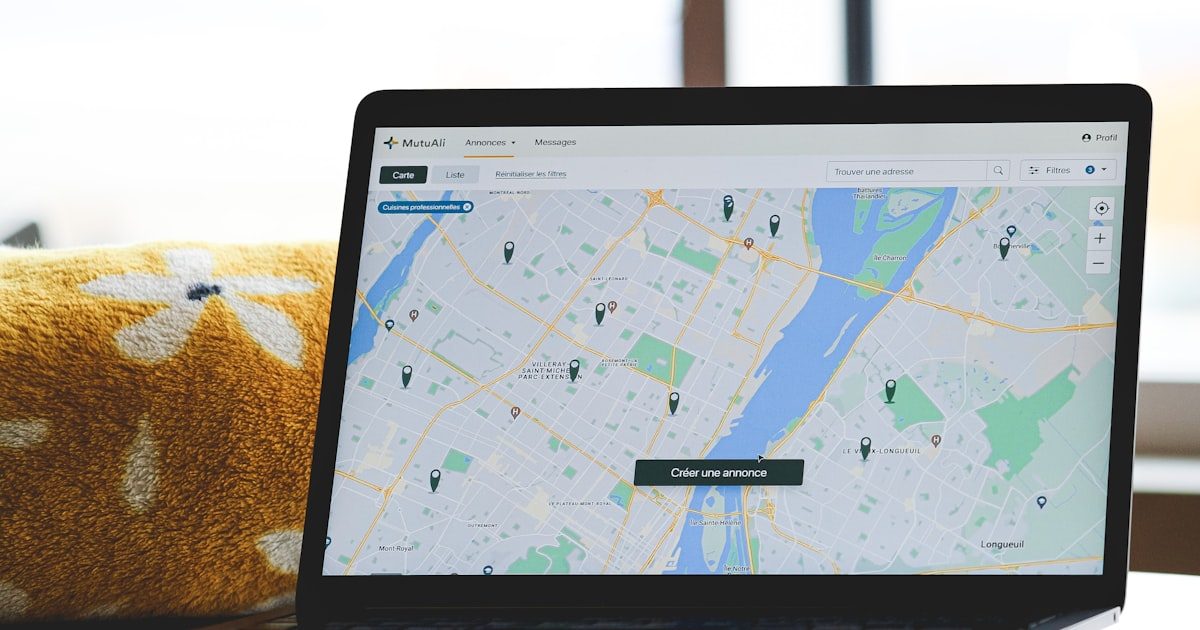
IPLocation.net is an IP geolocation lookup service that aggregates results from multiple geolocation databases and displays them side by side. When you look up an IP, IPLocation.net shows geolocation estimates from several providers (typically IP2Location, DB-IP, and ipinfo.io) simultaneously, letting you compare how different databases locate the same IP address. The site also provides basic tools like IP lookup, domain-to-IP conversion, and some educational content about IP geolocation. Its multi-database comparison approach is its distinguishing feature.
The key difference in approach: My IP Help merges multiple sources into a single composite result with enriched security data, while IPLocation.net shows raw results from multiple databases side by side for manual comparison. According to MaxMind’s accuracy documentation, city-level geolocation accuracy varies between 50% and 90% depending on the country and IP type, which is why multi-source approaches add value.
Feature Comparison
| Feature | My IP Help | IPLocation.net |
|---|---|---|
| Geolocation Approach | Composite (MaxMind + DB-IP merged) | Side-by-side from multiple providers |
| Geolocation Depth | City, region, postal code, coordinates, timezone | City, region, country, coordinates |
| Accuracy Method | Cross-validated composite results | Manual comparison of raw provider results |
| Threat Detection | VPN, proxy, Tor, cloud, datacenter, threat feeds | Not available |
| VPN/Proxy Detection | Dedicated databases for VPN, proxy, Tor, relay | Not available |
| ASN/ISP Data | Detailed ASN, organization, and routing info | Basic ISP from each provider |
| Network Tools | 20+ (DNS, WHOIS, port scan, traceroute, subnet) | Limited (IP lookup, domain conversion) |
| Bulk Lookup | Up to 100 IPs per batch | Not available |
| API Access | REST API with tiered plans | Not available |
| IPv6 Support | Full IPv6 geolocation and lookup | IPv6 lookup supported |
| Educational Content | Tool documentation and guides | IP geolocation explainer articles |
Key Differences
Geolocation Data Processing
The most significant difference is how each platform handles multiple data sources. My IP Help ingests data from MaxMind GeoLite2 and DB-IP, then runs a composite algorithm that selects the best-available data for each field. If MaxMind has city-level data but DB-IP has a more specific postal code, the composite result includes both. This produces a single, optimized result that requires no interpretation from the user. IPLocation.net takes the opposite approach: it shows you the raw results from each provider separately, letting you see where they agree and where they disagree. This transparency is useful for understanding geolocation limitations, but it leaves the user to determine which provider is correct for any given IP. For day-to-day lookups, My IP Help’s composite approach is more practical. For understanding geolocation database differences, IPLocation.net’s comparison view is instructive.
Security Enrichment
My IP Help adds layers of security intelligence that IPLocation.net does not provide. Every IP lookup includes VPN and proxy detection from dedicated databases, Tor exit node identification, cloud and datacenter provider recognition, and cross-referencing against curated threat feeds. This makes My IP Help suitable for security investigations, fraud analysis, and risk assessment in addition to basic geolocation. IPLocation.net provides geolocation data without any security context. It will tell you an IP appears to be in New York City, but it cannot tell you whether that IP belongs to a VPN provider, a cloud server, or has been flagged on threat intelligence lists. For use cases that require security-aware geolocation, My IP Help is the clear choice.
Professional Tooling and API Access
My IP Help provides professional capabilities that extend beyond web-based lookups. Its REST API allows developers to integrate geolocation and threat data into their applications, with tiered plans for different usage volumes. The platform also includes bulk lookup functionality for processing up to 100 IPs at once, and a comprehensive suite of network tools that complement geolocation data. IPLocation.net is a web-only tool without API access or bulk processing capabilities. For individual lookups through a browser, IPLocation.net works well. For integration, automation, or professional use at scale, My IP Help’s API and tooling provide the infrastructure needed. The IETF’s Special-Purpose IP Address Registries (RFC 6890) documents which IP ranges have special uses that affect geolocation interpretation.
For organizations evaluating geolocation services, the choice often comes down to use case. If you need to understand how different databases classify the same IP, IPLocation.net’s side-by-side view is uniquely informative for research purposes. If you need production-grade geolocation with security intelligence, API access, and integrated diagnostic tools for daily work, My IP Help provides a more complete package. Both tools are free for web lookups, so testing both with your specific IP addresses is the best way to evaluate which approach works better for your needs.
When to Use Each Tool
Choose My IP Help when:
- You want a single, optimized geolocation result from multiple sources
- Security intelligence (VPN, proxy, threat data) matters for your use case
- You need detailed ASN, ISP, and network metadata alongside location
- You want network diagnostic tools (DNS, WHOIS, port scanning) in the same platform
- You need API access for programmatic geolocation and threat lookups
- You need to process IPs in bulk for analysis or investigation
Choose IPLocation.net when:
- You want to compare raw geolocation results from multiple databases
- You are researching geolocation accuracy differences between providers
- You want a quick, simple geolocation check without extra features
- You are learning about how IP geolocation databases work
- You want to verify whether different providers agree on an IP’s location

Frequently Asked Questions
Which tool provides more accurate geolocation?
My IP Help’s composite approach often produces better results because it combines the strengths of multiple databases. IPLocation.net shows you raw results from each provider, which can be useful for verification but requires you to interpret discrepancies yourself. For most users, My IP Help’s merged result is more reliably accurate.
Can IPLocation.net detect VPNs or proxies?
No. IPLocation.net provides only geolocation data without any security intelligence. For VPN detection, proxy identification, Tor exit node flagging, or threat assessment, use My IP Help’s IP lookup which includes these security layers in every result.
Does IPLocation.net offer an API?
No. IPLocation.net is a web-only tool without programmatic API access. My IP Help provides a documented REST API with free and paid tiers for integrating geolocation, threat data, and VPN detection into applications and automated workflows.
Why do different geolocation databases show different results?
Geolocation databases use different data collection methods, update frequencies, and IP range allocations. Some rely on network routing analysis, others on user-contributed data or ISP partnerships. IPLocation.net makes these differences visible by showing results side by side. My IP Help resolves these differences algorithmically through its composite provider.
Which tool is better for looking up my own IP?
Both tools can show your current IP address and location. My IP Help additionally shows whether your connection is identified as a VPN, proxy, or residential connection, and provides threat status data. IPLocation.net shows geolocation from multiple databases. For a quick IP check with security context, My IP Help provides more useful information.
Can I check multiple IPs at once on either platform?
My IP Help offers bulk lookup for up to 100 IPs per batch, which is useful for security investigations and analysis. IPLocation.net does not offer bulk lookup functionality and requires individual queries for each IP address.
Do both tools support IPv6 lookups?
Yes. Both My IP Help and IPLocation.net support IPv6 address lookups. My IP Help provides full geolocation, threat data, and VPN detection for IPv6 addresses. IPLocation.net shows geolocation data from its multiple providers for IPv6 addresses.
Which tool offers network diagnostic tools?
Only My IP Help provides comprehensive network tools. You can run DNS lookups, WHOIS queries, port scans, traceroutes, and subnet calculations alongside IP geolocation. IPLocation.net is limited to IP and domain lookups.
How often is geolocation data updated?
My IP Help updates its MaxMind and DB-IP databases on a regular schedule, typically monthly for the full databases with more frequent updates for threat intelligence feeds. IPLocation.net’s update frequency depends on each individual provider it queries. Geolocation databases generally update monthly.
Is either tool free to use?
Both tools offer free web-based IP lookups. My IP Help provides free access to all network tools and lookups without account requirements, plus a free API tier for developers. IPLocation.net is free for web lookups. Neither platform charges for basic individual IP lookups through the web interface.
Try It Yourself
See how composite geolocation and security intelligence work together. Run a free IP lookup to get multi-source geolocation, threat status, VPN detection, and ASN data for any address. Try our free network tools including DNS lookup, WHOIS, and subnet calculator. For developers, explore the API documentation to integrate geolocation intelligence into your projects.