How Accurate Is IP Geolocation? We Compared Two Databases on 1 Million IPs
By the My IP Help team IP Addresses Updated 14 min read
Chapters
Chapters
IP geolocation is consistent for the country and rough for the city. On 1 million random IPv4 addresses, MaxMind GeoLite2 and DB-IP Lite agreed on the country for 96.2% of the addresses both placed. Where both named a city, the median distance between their points was 15.4 km, yet 11.8% of pairs sat more than 500 km apart.
We ran the comparison on 1 November 2026, using the free editions My IP Help uses. We added one test that has a real right answer: the locations Apple publishes for its iCloud Private Relay addresses. Below are the method, the numbers, what they cannot tell you, and why your own IP may show the wrong city.
How accurate is IP geolocation? The short answer
Country answers are consistent: the two free databases agreed on the country for 96.2% of the addresses both placed. City-level geolocation is an estimate with a wide error bar. MaxMind’s free data names a city for only 45.0% of addresses, because it leaves the city blank when it does not know the city.
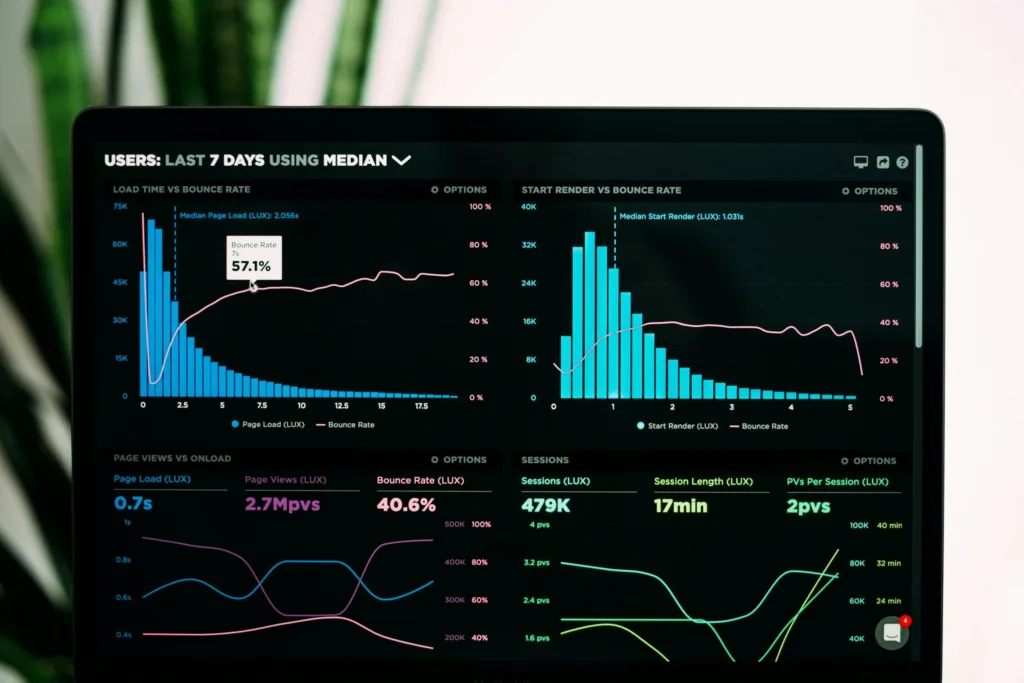
Here is what we measured across all 1,000,000 addresses, from coarse to fine:
| Level | What we measured | Result |
|---|---|---|
| Country | Both databases return a country | 995,843 addresses (99.6%) |
| Country | Both name the same country | 957,582 of 995,843 (96.2%) |
| Region | A region is given | MaxMind 46.0%, DB-IP 99.4% |
| Region | Region names agree (both give one, same country) | 63.4% of 455,775 |
| City | A city is given | MaxMind 45.0%, DB-IP 100.0% |
| City | Same city name (both give a city) | 31.2% of 449,674 |
| Distance | Median gap between the two points | 15.4 km |
| Distance | Within 25 km of each other | 56.4% |
| Distance | More than 500 km apart | 11.8% |
One caution before the details. These figures measure agreement between two databases, not accuracy against where people really are. Two databases can agree and both be wrong. The only place we could check against a known answer is Apple’s relay list, covered further down.
The low city-name match (31.2%) also undercounts real agreement. One database may say a suburb while the other says the city next to it, or spell the same place differently. The distance figures are the better guide to how far apart the answers really are.
How does IP geolocation work?
IP geolocation works by looking your address up in a database that maps address ranges to places. Nothing in the IP packet carries a location, and no GPS is involved. The database is a snapshot: the MaxMind GeoLite2 City file we tested was built on 27 October 2026, and the DB-IP Lite edition on 1 October 2026.
Vendors build those maps from a few kinds of evidence. None of them is a precise location on its own, so each vendor weighs them differently. That is why two GeoIP databases can give different answers for the same address.
- Registry allocations. Regional internet registries record which organisation holds each block and the country it registered. That is a good first guess for the country and says little about the city.
- ISP data and geofeeds. Some networks publish where their ranges are used. Apple does this for iCloud Private Relay with a public list of relay egress ranges, each with a country, region and city.
- Network measurements. Response times from servers in known places narrow down where a range can physically sit.
- Corrections. Network owners and users report wrong locations, and vendors fold accepted fixes into later builds.
Lookup sites only pick up a fix when they load a newer build. Our data sources page shows how often My IP Help updates each database.
Our test: MaxMind GeoLite2 vs DB-IP Lite on 1 million IPs
We looked up 1,000,000 random IPv4 addresses in both free databases and compared the country, region, city and the distance between their coordinates. Region names, for example, agreed for 63.4% of the addresses where both gave a region in the same country.
Method
- Databases. The same GeoLite2 City database My IP Help uses (build of 27 October 2026) and DB-IP IP to City Lite (October 2026 edition, downloaded 1 November 2026).
- Sample. 1,000,000 IPv4 addresses drawn uniformly at random with a fixed seed (20261101). We skipped private and special ranges such as 10/8, 100.64/10, 127/8, 192.168/16 and multicast.
- Comparison. Country by ISO code; region and city by English name with accents stripped; and the straight-line (haversine) distance between the two databases’ coordinates where both give a city.
- Network type. Each address was checked against My IP Help’s table of cloud and datacenter ranges (AWS, Google Cloud and Cloudflare published ranges plus the X4BNet datacenter list): 56,248 IPv4 ranges, updated 28 October 2026.
What the method cannot show:
- Agreement is not accuracy. We compared two databases with each other, not with where users really were.
- Weighted by address space, not people. A /8 owned by a university counts as much as a /8 run by a mobile carrier.
- Free editions only. The paid MaxMind GeoIP2 and DB-IP editions are more detailed.
- No residential or mobile split. The free databases do not carry connection type, so we could only separate cloud and datacenter ranges from everything else.
- IPv4 only. IPv6 was not tested.
Results
Both databases returned a country for 995,843 addresses. DB-IP alone placed another 4,157, and MaxMind never placed an address that DB-IP missed. The bigger difference is at city level: DB-IP always names a city, while MaxMind names one for 45.0% of addresses and leaves it blank when it does not know the city.
For the 449,674 addresses where both named a city, we measured the distance between their two points:
| Distance between the two databases’ points | Share of addresses |
|---|---|
| Within 10 km | 44.0% |
| Within 25 km | 56.4% |
| Within 50 km | 63.5% |
| Within 100 km | 69.7% |
| More than 500 km apart | 11.8% |
The percentiles tell the same story from the other side. The median gap was 15.4 km, the 75th percentile 169.2 km and the 90th percentile 619.0 km. So the typical answer is close, and the tail is long.
MaxMind’s own accuracy radius points the same way. Where it gives a city, the radius has a median of 20 km and a 90th percentile of 100 km. It is 10 km or less for 30.0% of those addresses and 100 km or more for 20.0%.
Datacenter vs everything else
Cloud and datacenter addresses agree less often on the country but far more often on the place.
| Cloud / datacenter ranges | Everything else | |
|---|---|---|
| Share of sample | 110,691 (11.1%) | 889,309 (88.9%) |
| Country agreement | 89.5% | 97.0% |
| City name agreement (both give a city) | 79.4% | 23.9% |
| Median distance between the two points | 1.2 km | 22.7 km |
| Within 25 km | 89.9% | 51.4% |
| More than 500 km apart | 4.2% | 12.9% |
| MaxMind accuracy radius, 90th percentile | 20 km | 200 km |
Our reading: datacenter addresses sit in a few well-known buildings. Where both name a city, 79.4% name the same one (median gap 1.2 km). But cloud ranges are announced globally and re-used across regions, so the country itself is disputed more often.
Consumer and other networks behave the other way round. The country is rarely in doubt, at 97.0% agreement, but city answers scatter, with a median gap of 22.7 km. Home and mobile connections live in this group, which is why your own lookup can feel off.
Where they disagree on the country
The disagreements are concentrated in a few pairs. These are the ten most common pairs, written as MaxMind’s country first and DB-IP’s second:
- United States vs Canada: 7,486 addresses
- Singapore vs China: 2,327
- United States vs Germany: 1,561
- United States vs United Kingdom: 1,430
- United States vs Japan: 1,429
- United Kingdom vs United States: 1,397
- United States vs Brazil: 666
- United States vs Netherlands: 549
- Switzerland vs France: 494
- Canada vs United States: 484
US vs Canada is by far the largest pair, and it runs mostly one way: the reverse pair is 484. We did not trace the cause range by range. Ranges registered in one country and used in a neighbour, or in a cloud region abroad, would produce exactly this pattern.
The one test with a right answer: iCloud Private Relay
Apple’s published relay locations are the one ground truth we have, and against them MaxMind GeoLite2 matched the country for all but one of 41,768 ranges (41,767) while DB-IP Lite matched 47.6%. Apple’s list, downloaded on 1 November 2026, holds 285,129 ranges, 41,768 of them IPv4, each with the place Apple says it represents.
We looked up the first address of each IPv4 range in both databases and compared it with Apple’s country and city. Of the 41,768 ranges, 40,776 have a city in Apple’s list.
| MaxMind GeoLite2 | DB-IP Lite | |
|---|---|---|
| Country matches Apple | 41,767 (100.0%) | 19,879 (47.6%) |
| City matches Apple (40,776 ranges with a city) | 39,016 (95.7%) | 819 (2.0%) |
| No city given | 392 (1.0%) | 0 |
MaxMind follows the locations Apple publishes for its relay addresses. The free DB-IP edition puts more than half of the relay ranges in a different country from the one Apple states: 21,889 of 41,768, most of them ranges operated by Cloudflare (17,314 of its 19,757). The most common wrong country is Canada (6,047 ranges). We did not trace the cause. A relay user can therefore look like they are abroad on one lookup site and at home on another.
This test covers relay addresses only, a small and unusual slice of the internet with a published geofeed. It shows how each database handles a geofeed. It says nothing direct about home broadband or mobile addresses. Our guide to iCloud Private Relay explains how the relay picks an address.
You can see a relay address on My IP Help: 172.224.226.1 shows an approximate location with a radius of ±100 km.
What the vendors say about IP geolocation accuracy
MaxMind publishes accuracy figures for its paid GeoIP City database: in the United States, 60% of addresses are correctly located within 50 km, according to its GeoIP accuracy comparison page (read 1 November 2026, undated). Another 32% are placed in a city outside 50 km, and 8% have no city-level data.
For the United Kingdom the same page shows 67%, 23% and 11%. Those figures use its default view: a 50 km radius, cellular and broadband IPs, and IPv4 plus IPv6. MaxMind describes the method in its own words: “Accuracy is calculated by checking known web user IP address and location pairs”.
Those are paid-database figures. The page shows none for GeoLite, and the free editions are less precise. Even so, the vendor itself places a large share of city answers outside 50 km, so a city from an IP is a rough area at best.
MaxMind also ships an accuracy radius with each city answer, which is the most useful single number for judging a lookup. We found no comparable DB-IP accuracy figure to cite. DB-IP Lite is free under CC BY 4.0.
Why does my IP show the wrong location?
Your IP usually shows the wrong location because the database places your provider’s equipment or registration, not your home. For consumer and other non-datacenter networks in our test, the median gap between two databases’ city points was 22.7 km, and 12.9% of pairs were more than 500 km apart. These are the common causes.
Your ISP’s addresses are registered or routed elsewhere
Many providers hand out addresses from pools registered at their head office or routed through a regional hub. With CGNAT, many customers share one public address, and that address belongs to a gateway that may sit in another city. The lookup shows the gateway’s area, not yours.
Mobile networks
Phone data usually leaves the carrier’s network through a small number of large gateways. Your phone can be in one town while its public address points to a city hundreds of kilometres away. Switching to Wi-Fi often changes the result completely.
A VPN or privacy relay
A VPN shows the VPN server’s location, by design. Relays are subtler: as the Apple test showed, one database can follow the relay’s published location while another places it in a different country. If you see a foreign country, check whether a VPN, relay or browser privacy setting is on.
A stale database
Address blocks get sold, moved and reassigned. A database is a snapshot, and a lookup site may run a build that is weeks old. If your provider moved a range recently, the old city can stick until the next build lands. With a dynamic address, a router restart can also move you into a range placed somewhere else (see static vs dynamic IP).
Country-only records drawn as a point
When a database only knows the country, it still has to give coordinates. Many tools draw that as a single point near the middle of the country. A map pin in an empty field or a small central town often means “country only”, not a real city answer.
Anycast addresses
Some addresses, such as public DNS resolvers and CDN edges, are announced from many places at once. Your traffic goes to the nearest copy. Any single location for such an address is a convention, so lookups disagree. For any of these causes, comparing your IP’s time zone vs your device’s is a quick way to spot a mismatch.
Can an IP address show my exact address?
No, an IP address cannot show your street address; it gives an approximate location, often only a city or a country. Even MaxMind’s own accuracy radius is 10 km or less for just 30.0% of the addresses where it names a city. For 20.0% of them, the radius is 100 km or more.
The link between an IP and a household lives in your provider’s records, not in any geolocation database. Providers generally release subscriber details only in response to a legal request, such as one from the police. A lookup site sees only range-level data: your provider, a rough area, and whether the address belongs to a datacenter, VPN or relay. That is useful for a risk check, not for finding a person.
How to fix your IP location
To fix your IP location, report it to the database vendor and ask your provider to update its own data. MaxMind runs a location correction form: “Use this form to update the location associated with an IP or IP range.” Corrections without an account need email verification.
In MaxMind’s words, “MaxMind does not guarantee that any data correction will be accepted.” An accepted fix also reaches lookup sites only when they load the next build. If your provider uses CGNAT or a regional gateway, the “wrong” city may be correct for the address, just not for you.
If you run a website
From running both databases behind our own lookups, the practical rules are short:
- Do not block on city. With 11.8% of city pairs more than 500 km apart, a city rule will hit real customers.
- Use the country for defaults like language, currency and legal notices, and give people a way to change it.
- Read the accuracy radius. A city with a 200 km radius is a region, not a city.
- Treat relays and VPNs separately. Their location says where the exit is, not where the person is.
How My IP Help uses the two databases
My IP Help takes the country from MaxMind first and lets DB-IP fill the gaps, which matters because DB-IP alone placed 4,157 of our million addresses. The city, region and coordinates come from one source: the database that knows the city, MaxMind first, otherwise DB-IP. Gaps such as postal code and time zone are then filled for that place (the other database when it names the same city, otherwise derived from the coordinates).
We never mix a city from one database with coordinates from the other. That avoids a pin that sits in neither database’s answer. Each IP lookup shows the result as an approximate location, with MaxMind’s accuracy radius when it supplies one.
Two examples show the range. A Montreal cable address, 24.48.0.1, comes back with a radius of ±5 km. The relay address above comes back with ±100 km. If you want to see how other sites handle the same data, see free IP lookup tools compared or our MaxMind comparison.

Frequently Asked Questions
How accurate is IP geolocation?
IP geolocation is consistent for the country and rough for the city. In our test of 1 million random IPv4 addresses, MaxMind GeoLite2 and DB-IP Lite agreed on the country for 96.2% of the addresses both placed. At city level, the median gap between their points was 15.4 km. Agreement is not proof, though: two databases can agree and both be wrong.
How accurate is IP location at city level?
City-level IP location is a rough area, not a point. Where both databases named a city, 56.4% of their pairs were within 25 km of each other and 69.7% within 100 km, but the 90th percentile gap was 619.0 km. That measures agreement between two databases, not distance from the user. MaxMind’s free data names a city for only 45.0% of addresses.
Why does my IP show the wrong city?
Your IP shows the wrong city because the database locates your provider’s equipment, not your home. Traffic often leaves through a gateway in a larger city, and CGNAT can put many customers behind one shared address. Mobile data and outdated database builds cause the same effect. A city pin from an IP is best read as a rough area.
Why does my IP show a different state or country?
A different country usually means a VPN, a privacy relay or a range used outside the country it was registered in. Cloud ranges are re-used across regions: for datacenter addresses, the two databases agreed on the country for only 89.5%. For Apple’s relay addresses, DB-IP Lite matched Apple’s published country for 47.6% of ranges. A different state is more often your provider’s network: a regional gateway or CGNAT can put you in a neighbouring state.
Can an IP address show my exact location?
No. An IP lookup returns an approximate location, usually a city or region, sometimes only a country, along with an accuracy radius. In our data, MaxMind’s radius was 10 km or less for 30.0% of the addresses where it named a city, and 100 km or more for 20.0%. Nothing in a geolocation database points to a building.
Does my IP address show my home address?
No, your IP address does not show your home address to websites or lookup tools. The record linking an address to a subscriber is held by your internet provider, which generally releases it only to a legal request such as a police inquiry. A lookup shows your provider and a rough area, as you can see on our IP lookup.
Why do two IP lookup sites show different locations?
Two lookup sites differ because they use different databases, different builds and different rules for combining them. In our sample, the most common country disagreement was MaxMind saying United States and DB-IP saying Canada, for 7,486 addresses. City names matched for only 31.2% of the addresses both placed in a city. See free IP lookup tools compared.
How do I fix my IP location?
Submit a correction to the database vendor and ask your internet provider to check its own location data. MaxMind’s correction form lets you update the location for an IP or a range, with email verification if you have no account. MaxMind says it does not guarantee any correction will be accepted, and lookup sites only show a fix after loading the next build.
Is MaxMind or DB-IP more accurate?
On the one test with a known answer, MaxMind was far more accurate. Against Apple’s published relay locations, MaxMind GeoLite2 matched the city for 95.7% of ranges and DB-IP Lite for 2.0%. That test covers relay addresses only. For the rest of the internet we measured agreement between the two, not accuracy, so we cannot rank them for home or mobile users.
How does IP geolocation work?
IP geolocation works by matching your address to a range in a database that maps ranges to places. Vendors build those maps from registry allocations, ISP data and published geofeeds, network timing measurements and user corrections. They ship the result as a snapshot on a schedule. No GPS is involved, so the answer is only as current as the build the site uses.
Create your free account
Get access to IP lookup tools, bulk reports, and more. Free forever.
This article includes free IP geolocation data provided by MaxMind, creator of GeoIP®. IP Geolocation by DB-IP.